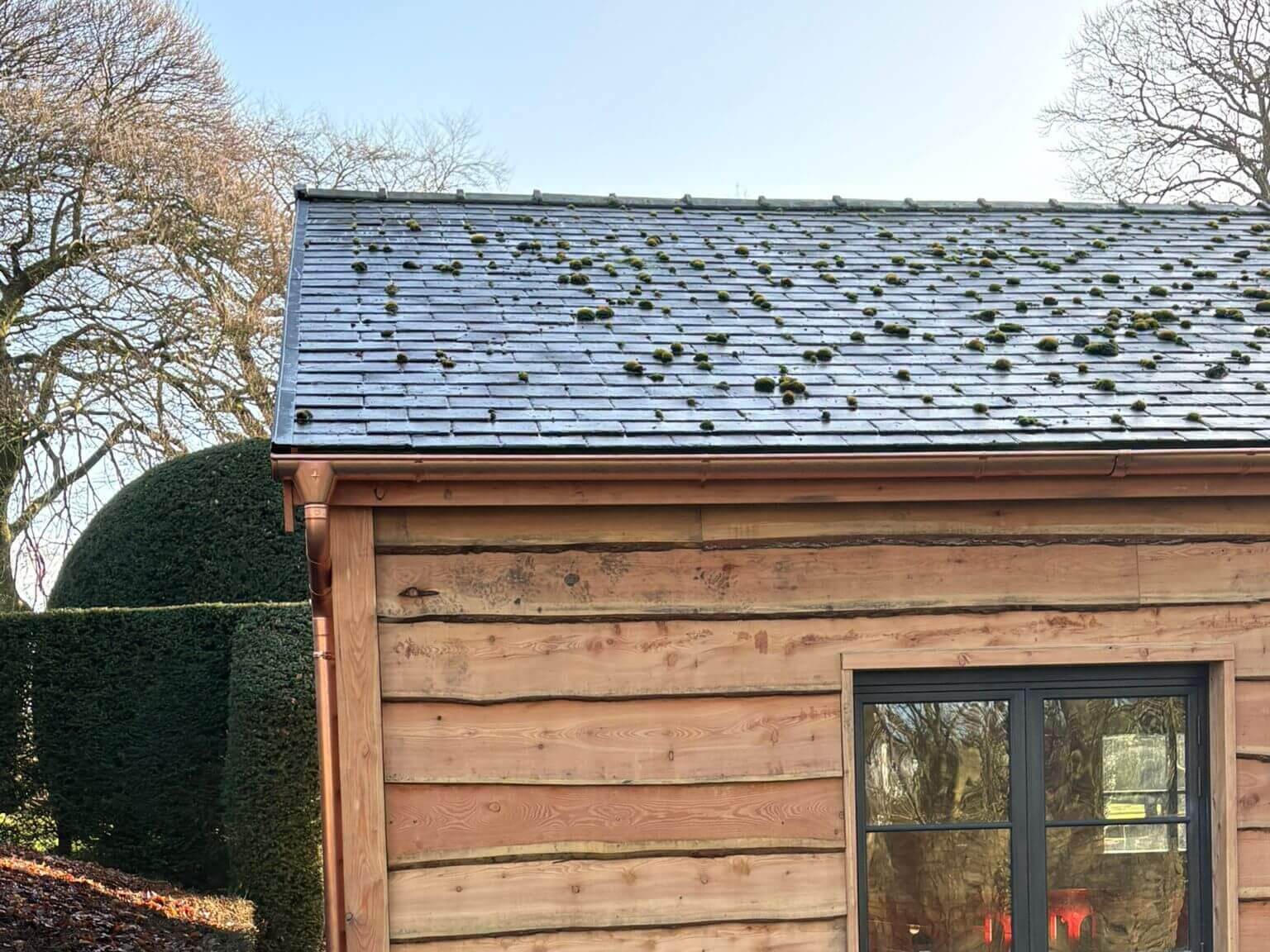
Copper rainwater systems aren’t the obvious first choice, but at a heritage country house estate near Burnley — operating as a wedding and events venue — the new leisure building warranted them. Not because the building was listed, but because on a commercial heritage estate where the exterior is part of the product, the roofline material is a business decision, not just a construction one.
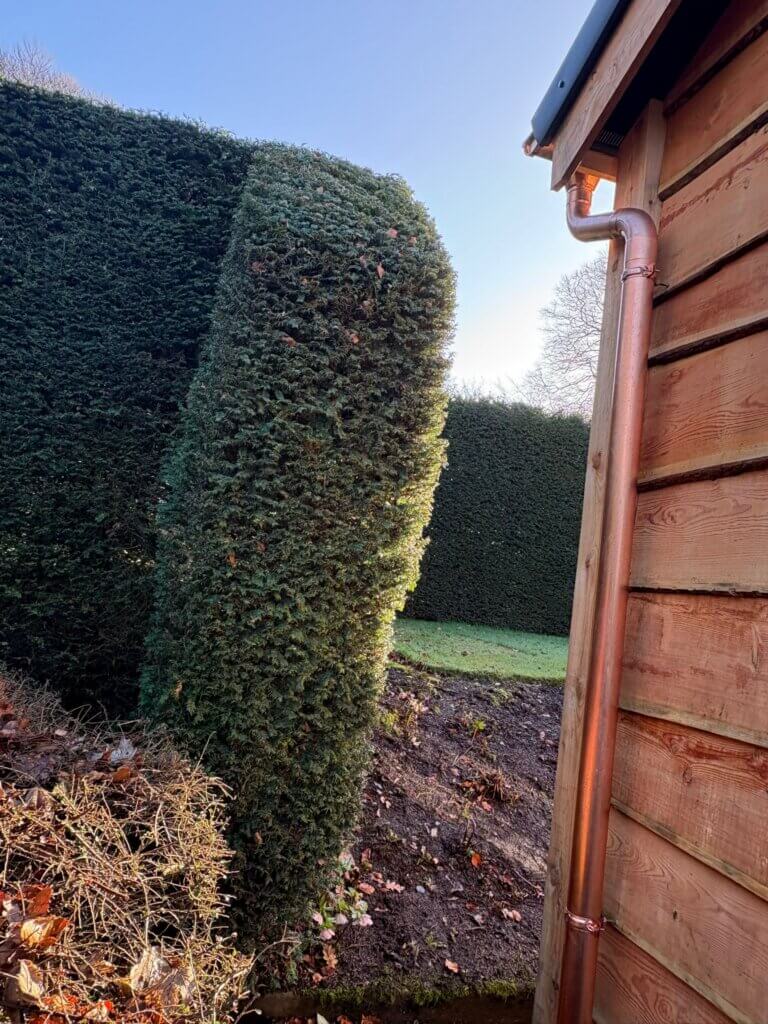
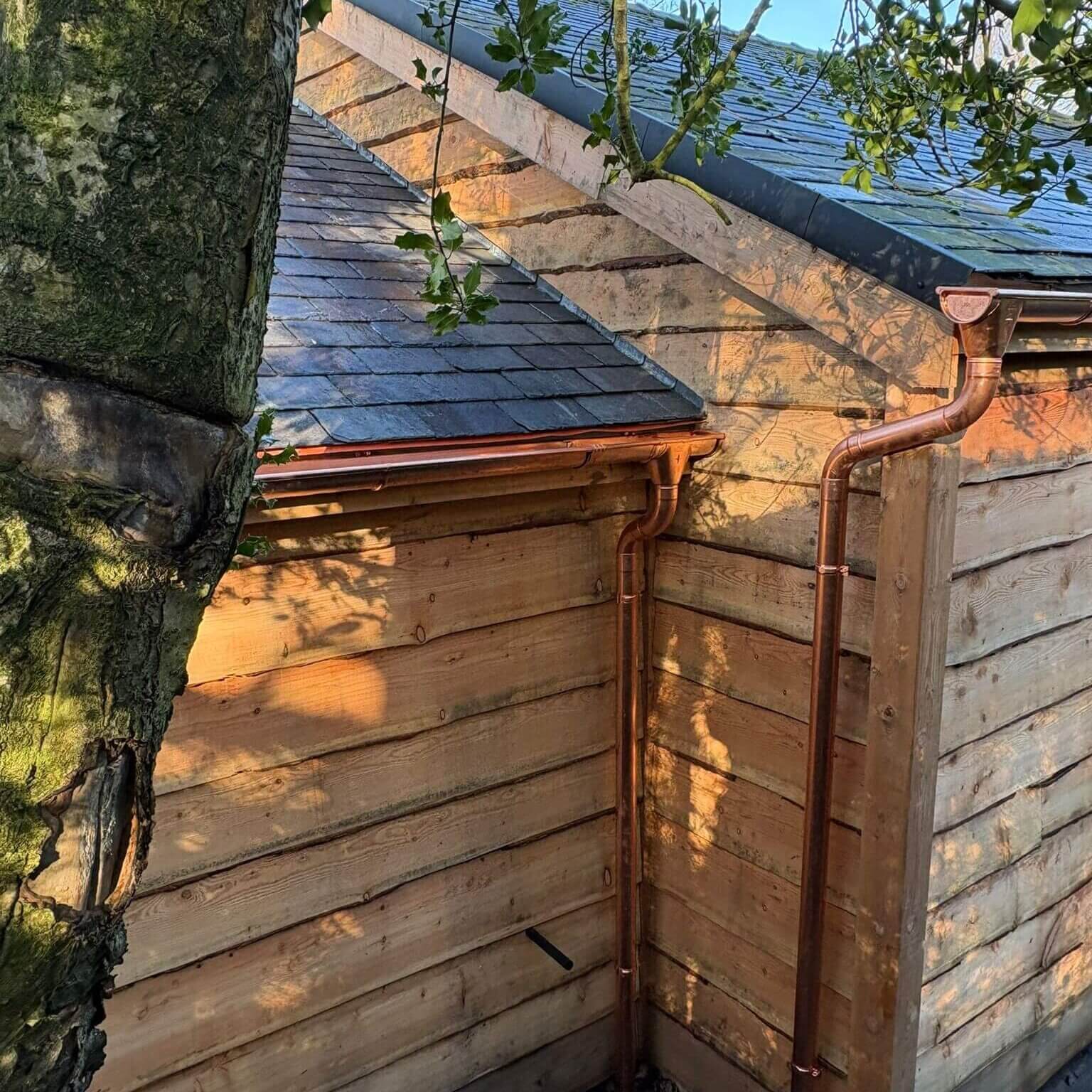
We installed copper half-round gutters and round downpipes throughout the leisure building, which houses a pool and spa: around 30 linear metres, completed over two days.
The Venue Exterior Is Commercial Infrastructure
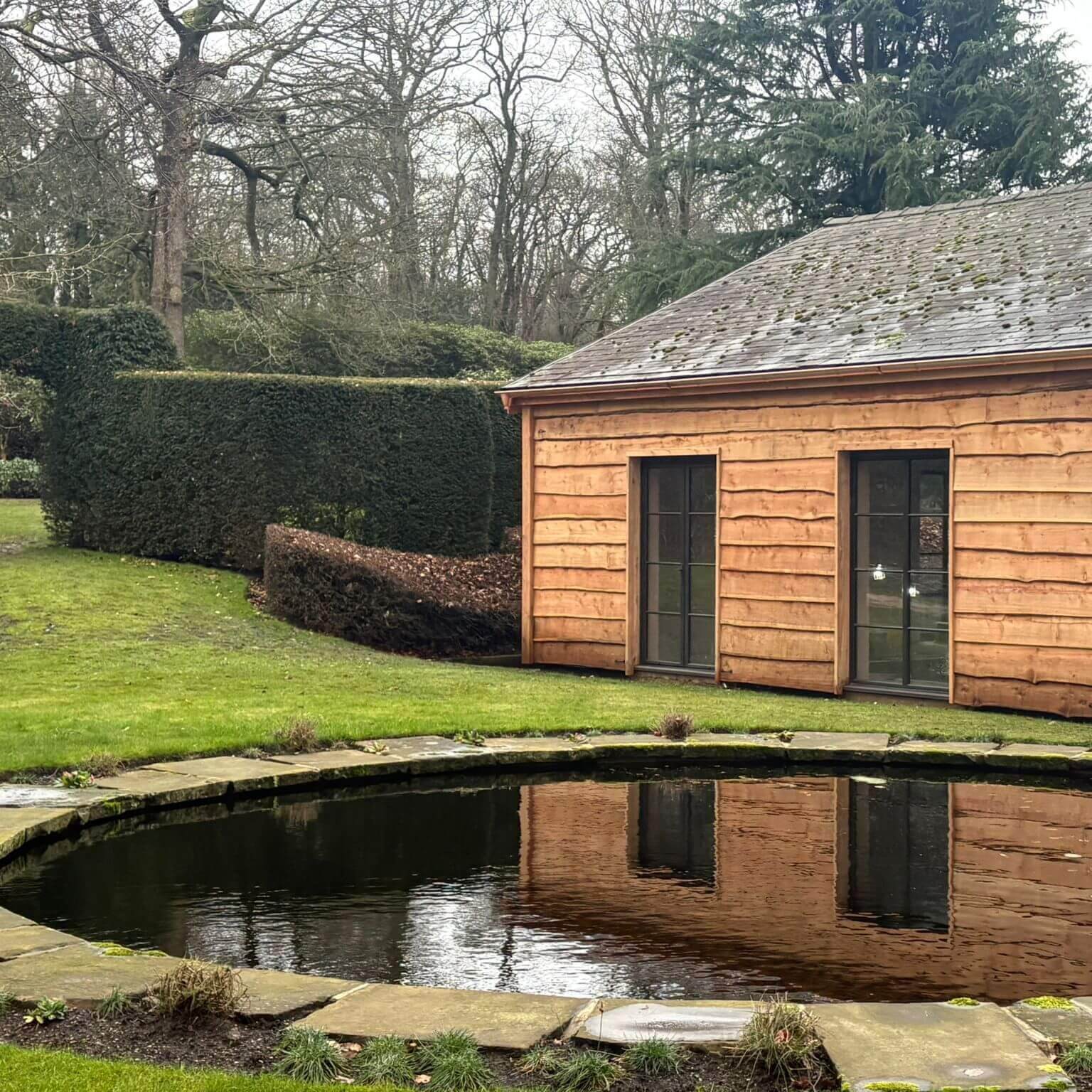
Wedding venues sell an experience built around setting. The grounds, the buildings, the details in the background of every photograph — all of it ends up on websites, in brochures, in the imagery the venue uses to justify its day rate. A roofline material that looks wrong against a centuries-old estate doesn’t just jar aesthetically; it works against the commercial proposition the venue is built around.
That’s not a soft argument. It’s why the specification here was copper rather than aluminium or uPVC — both of which would have been faster, cheaper, and wrong. The estate has been accumulating architectural character for centuries. The leisure building, as a new addition within those grounds, needed to sit within that register from day one and grow into it over time rather than read as an obvious modern intervention.
The Pool and Spa Environment
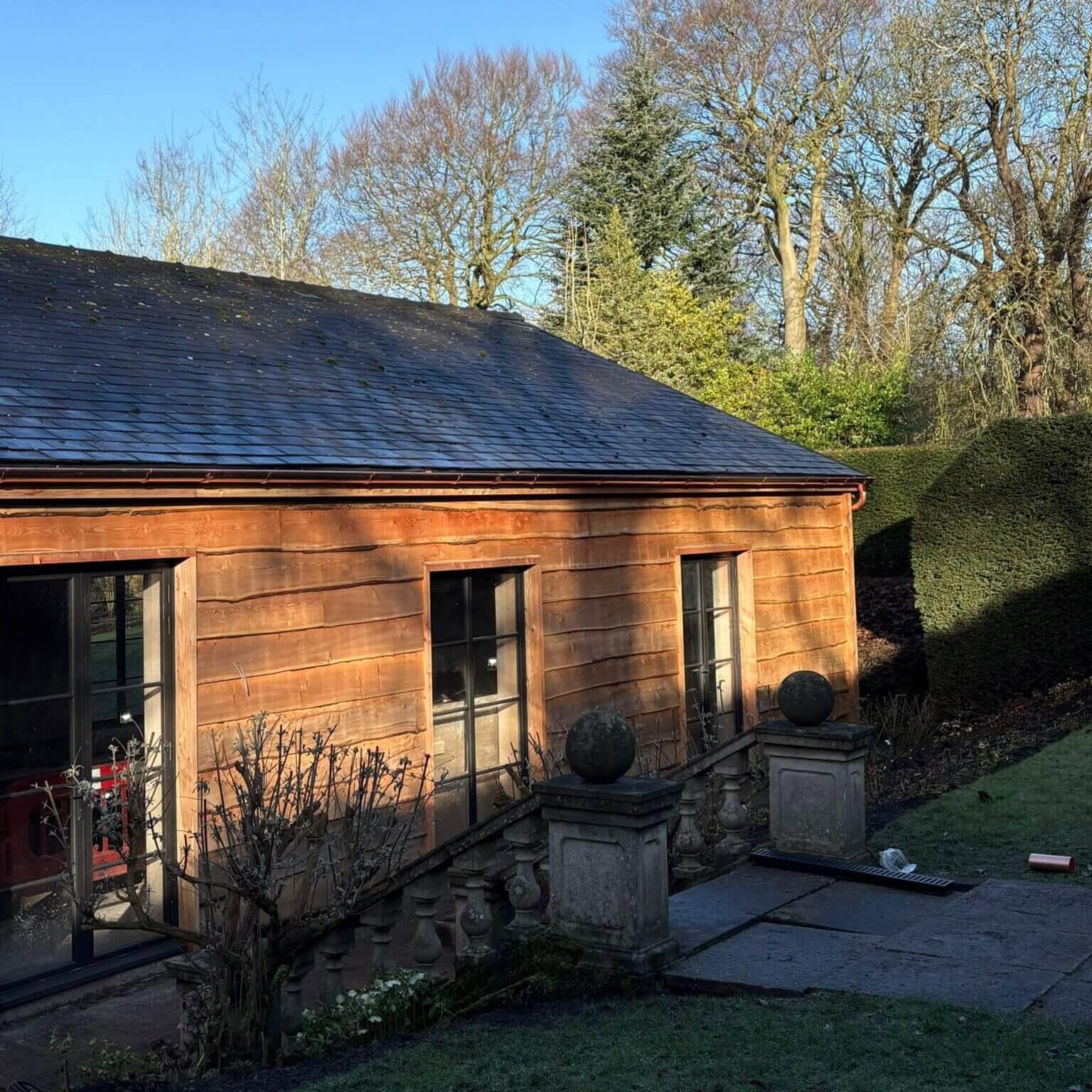
The leisure building’s specific use creates installation demands that most standard rainwater systems aren’t well-suited to. The combination of sustained humidity, temperature fluctuation and chlorinated water vapour from the pool and spa is more corrosive and demanding than a typical commercial roofline. It shortens service lives on materials that look adequate on paper and creates maintenance problems on systems that were never really appropriate for the environment.
Copper handles this well. The same chemistry that makes copper pipe the default for plumbing in demanding environments applies here — natural corrosion resistance means it doesn’t degrade in sustained damp conditions, and its antimicrobial properties limit biological growth on the system itself. Copper rainwater systems installed to the right standard carry a 100-year-plus service life. On an estate built to outlast the people running it, that’s a relevant number.
The Patina Question
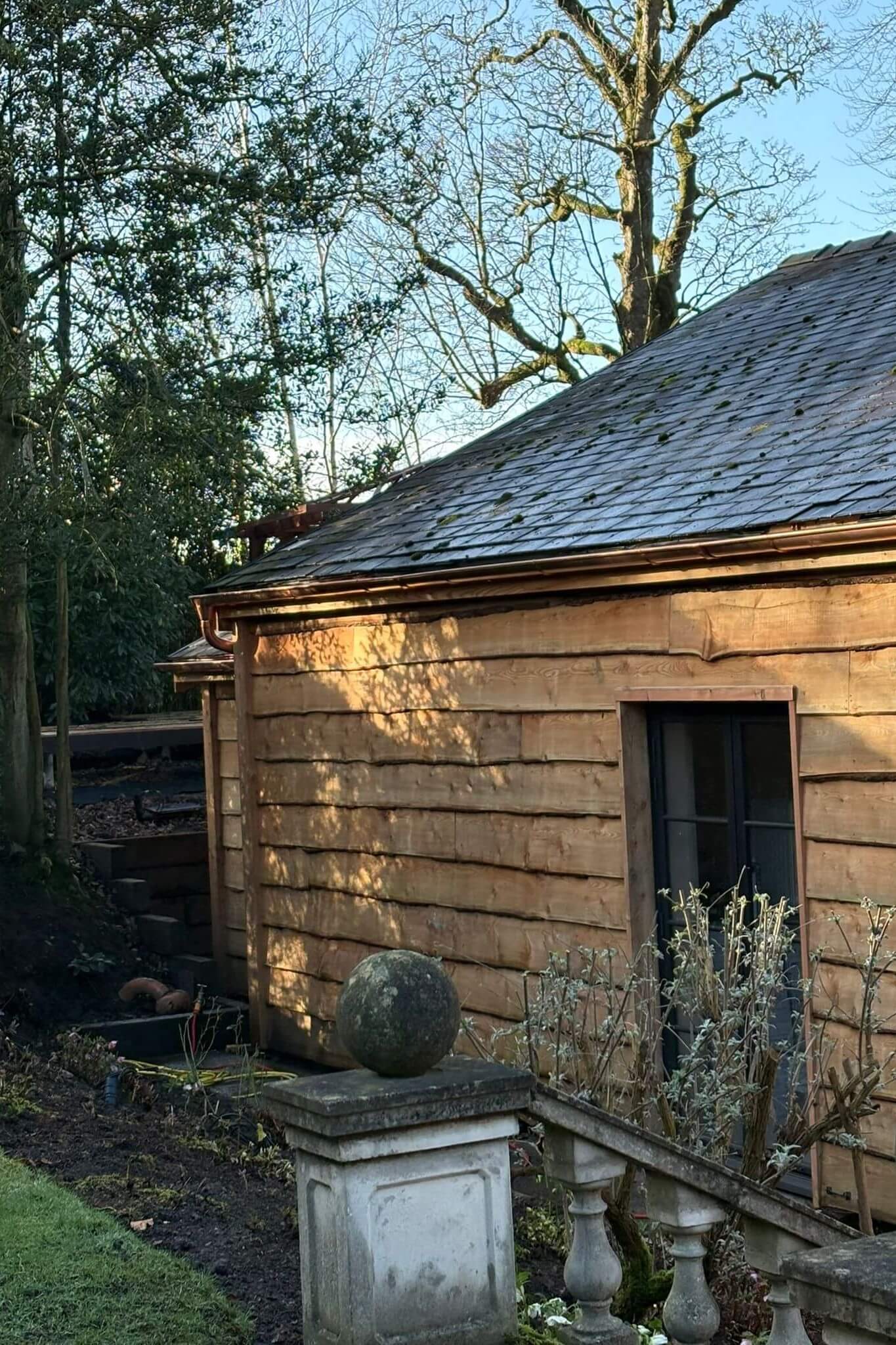
New copper is bright and distinctly metallic. Over time — typically five years or more depending on exposure — it oxidises through bronze tones toward the blue-green verdigris most people associate with old church roofs and period civic buildings. That transition isn’t deterioration; it’s the formation of a stable patina layer, cuprous oxide and carbonate compounds that protect the underlying metal and account for copper’s exceptional longevity.
For a heritage estate operating as a commercial venue, that evolving finish matters practically as well as aesthetically. An installation that gradually reads as part of the grounds rather than an obvious modern addition is worth specifying for — particularly on a building that will be photographed repeatedly over years and decades as the venue’s own image develops.
Material Versatility in Practice
We sourced Zambelli’s copper range through Rainclear for this project — the same manufacturer whose galvanised steel systems we’ve installed on social housing schemes in York and Liverpool. Different materials, same principle: the specification drives the material choice, not the other way around.
Aluminium remains the core of what we do — seamless and sectional systems across residential and commercial rooflines — but the right answer for a heritage leisure facility within a high-specification estate isn’t always aluminium. Galvanised steel, cast iron, copper: we install all of them, and we understand why each gets specified where it does.
What This Means for Specifiers
For architects, estate managers and commercial property owners working on high-specification buildings within heritage settings, rainwater systems tend to be considered late in a project — which is when the wrong material gets fitted because the right material requires a longer lead time or a supplier relationship that isn’t already in place.
Copper rainwater systems aren’t complicated to specify or install, but they require knowing where to source them and how to handle them. Jointing, thermal movement and fixing methods differ from aluminium or uPVC. Getting those details right is what determines whether a 100-year material actually performs for 100 years.
If you’re working on a heritage estate, a high-specification leisure facility or any project where the roofline material needs to earn its place rather than just function, we’re happy to discuss your copper rainwater systems requirements.
Call us on 01457 371676 or visit rainmen.co.uk to get in touch.
Rainmen: Over 20 years keeping buildings dry – from individual homes to social housing schemes across the North West and beyond.